Navigating the Island of the Gods: A Tokyo to Bali Cultural Guide

The scent of frangipani and clove incense hangs in the humid air, a stark, sensory counterpoint to the clean, electric hum of Tokyo. The transition from the ordered precision of Japan to the fluid spirituality of Bali is profound. For the Japanese traveler, whether on a honeymoon seeking serenity in Ubud or a family exploring the southern coasts, this contrast is the island’s primary allure. Yet, it also presents a subtle challenge: how to navigate a culture so openly expressive and spiritually interwoven into daily life, with customs that differ significantly from those at home? See also: explore Japanese Visa Bali.
A journey from Tokyo to Bali is more than a change in longitude; it is an immersion into a society where the sacred and the secular are inseparable. Understanding the nuances of Balinese Hinduism, local etiquette, and social norms is not merely about being a polite tourist. It is the key to a more meaningful and resonant experience, transforming a simple vacation into a genuine cultural exchange. This guide addresses the essential cultural considerations for travelers arriving from Japan, ensuring your conduct is as graceful as the island itself.
The Direct Passage: Your Tokyo to Bali Flight and Arrival Protocol
The physical journey from Japan to Bali is straightforward. Direct flights operate daily, connecting Tokyo’s primary hubs, Narita (NRT) and Haneda (HND), with I Gusti Ngurah Rai International Airport (DPS) in Denpasar. Carriers such as Garuda Indonesia and All Nippon Airways (ANA) typically complete the flight in approximately 7.5 to 8 hours. Upon arrival, the first administrative step for Japanese passport holders is securing a Visa on Arrival (VOA).
As of late 2023, the VOA is available to citizens of over 85 countries, including Japan. The process is efficient but requires preparation. The fee is IDR 500,000 per person (approximately 5,000 JPY or 35 USD, subject to exchange rate fluctuations), payable in Rupiah, major foreign currencies, or by credit card. This visa is valid for 30 days and can be extended once for an additional 30 days. To avoid queues, an electronic VOA (e-VOA) can be applied for online before departure. Ensure your passport has at least six months of validity from your date of entry. Once through immigration, you will enter the arrivals hall, where a pre-arranged driver or a registered airport taxi (look for the official counter to avoid touts) is the most reliable transport option. See also: explore Contact.
Currency and Commerce: From Japanese Yen to Indonesian Rupiah
The economic landscape of Bali operates on the Indonesian Rupiah (IDR), a currency of high denominations that can be initially disorienting. A 1,000 JPY note can convert to over 100,000 IDR. While exchanging a small amount of currency at Narita or Denpasar airport for immediate needs like a taxi is convenient, their rates are seldom competitive. For more substantial exchanges, seek out authorized money changers in towns like Seminyak or Ubud. Reputable companies like BMC (Bali Maspintjinra) or those with clear “No Commission” signs and digital rate boards offer fair value. Always count your money at the counter before leaving. See also: see Tokyo to Bali Travel Guide’s About.
Major credit cards (Visa, Mastercard) are widely accepted in hotels, larger restaurants, and established boutiques. However, for local markets, smaller family-run restaurants (*warungs*), and temple entrance fees, cash is indispensable. It is advisable to inform your credit card company of your travel dates to prevent your card from being flagged for suspicious activity. ATMs are plentiful, but stick to those located at banks or inside convenience stores to minimize the risk of card skimming. A working knowledge of typical costs provides context: See also: Tokyo to Bali Travel Guide Home.
- A bottle of local Bintang beer at a restaurant: IDR 30,000 – 50,000
- A simple meal of *Nasi Campur* at a local *warung*: IDR 40,000 – 80,000
- A one-hour Balinese massage at a mid-range spa: IDR 150,000 – 300,000
- Short-distance ride via Gojek or Grab app: IDR 20,000 – 60,000
The Art of Balinese Etiquette: Navigating Social Graces
While Japanese culture places a high value on formal respect and non-verbal cues, Balinese etiquette is rooted in communal harmony and religious observance. The Balinese are famously warm and patient, but understanding their customs demonstrates a deeper level of respect. The most common greeting is a simple smile and a slight nod. The formal Hindu greeting, placing the palms together at the chest level (the *sembah*), is also appreciated, especially when interacting with priests or elders.
According to Made Wijaya, a late and respected authority on Balinese culture, “The left hand is considered impure. Always use your right hand to give or receive anything, including money, and to touch another person.” This is a critical rule to observe. Similarly, the head is considered the most sacred part of the body. Refrain from touching anyone’s head, even a child’s. Conversely, the feet are considered the lowest and most unclean part, so avoid pointing your feet at people or sacred objects. When sitting on the floor, it is polite for men to sit cross-legged and for women to kneel with their legs together to one side. These small gestures are signs of a culturally aware visitor making the Tokyo to Bali transition thoughtfully.
Sacred Spaces: Temple Dress Code and Conduct
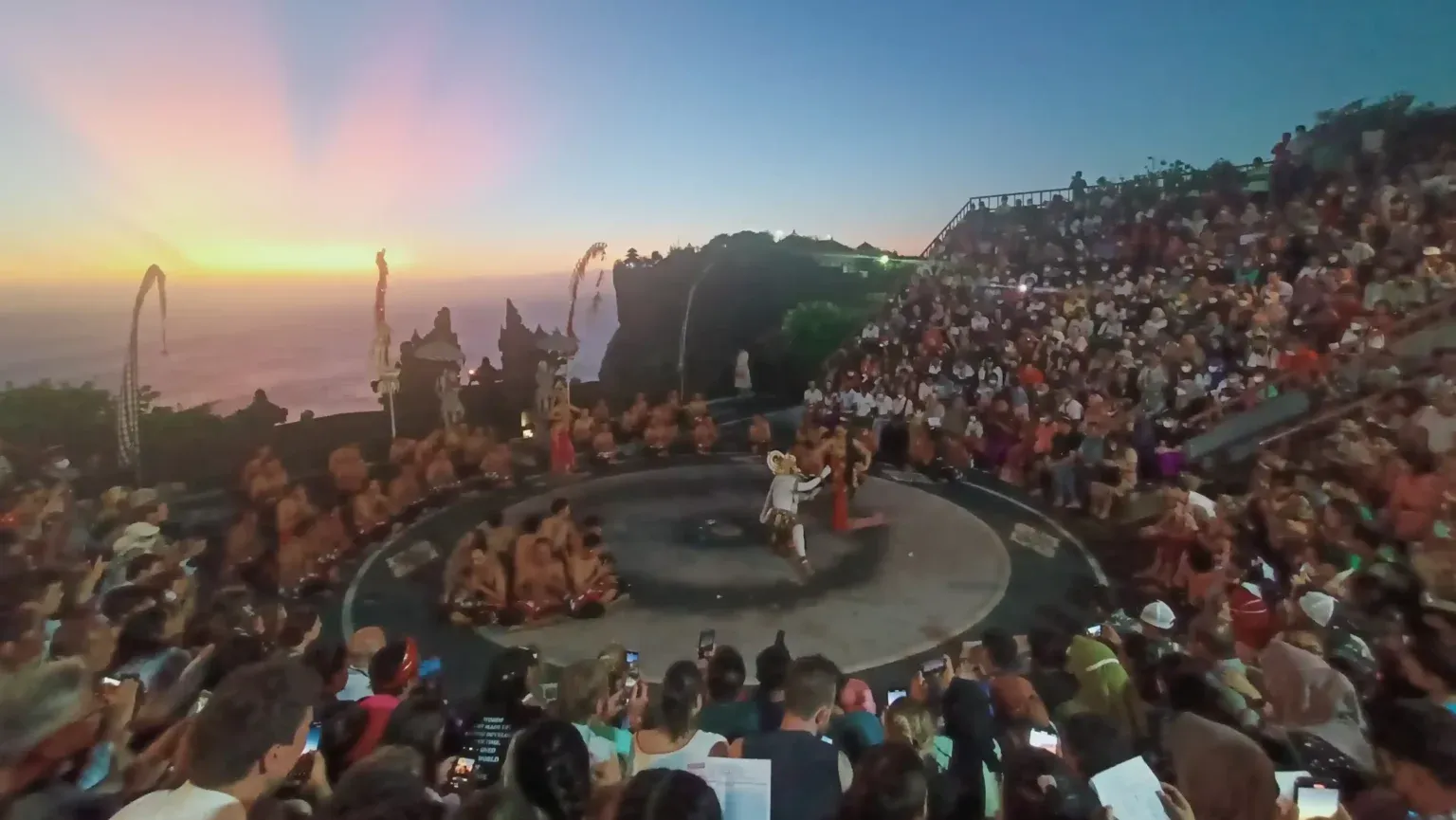
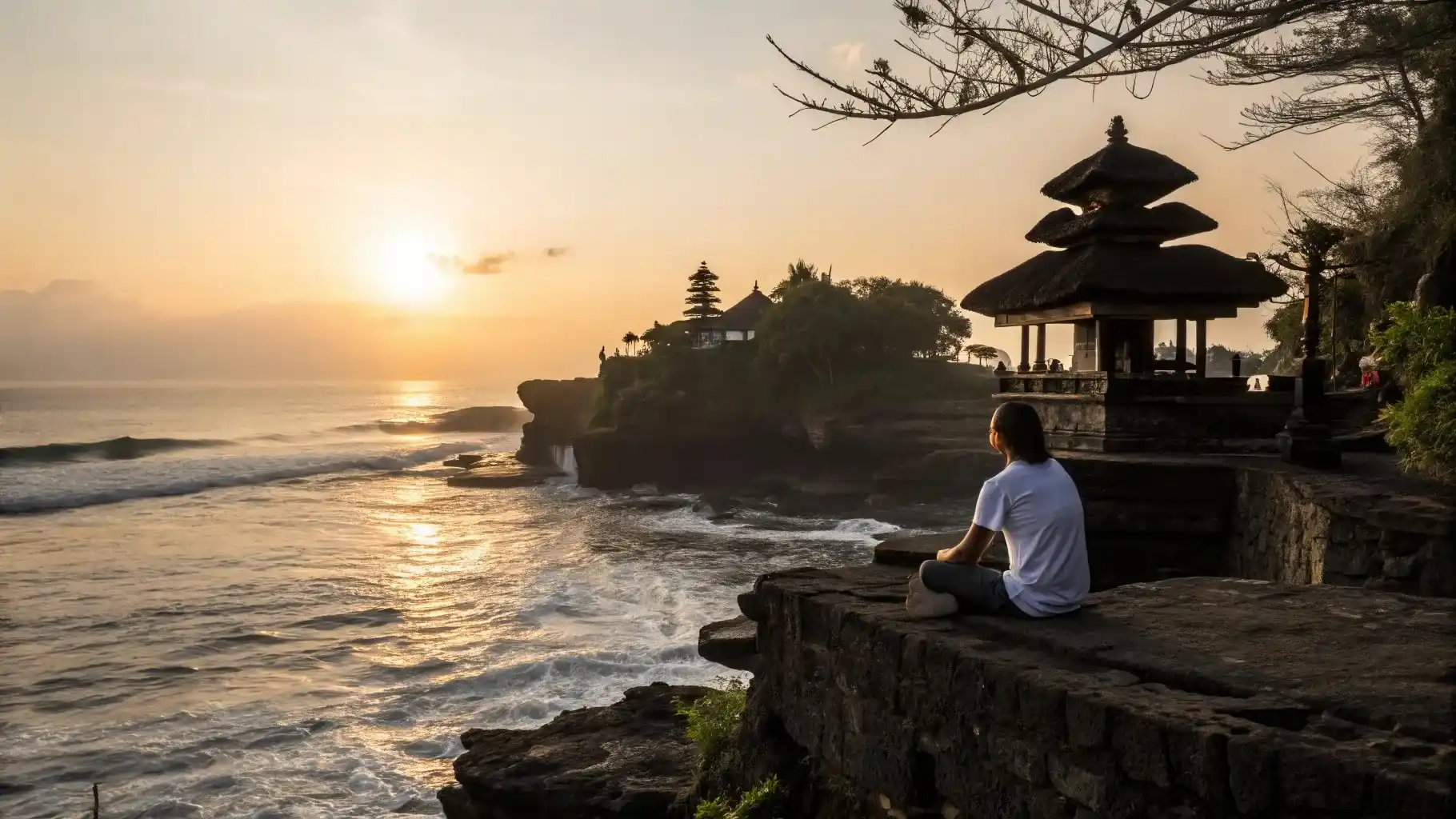
Bali is home to over 20,000 temples, or *pura*, and visiting one is essential to understanding the island’s soul. Entry into these sacred spaces requires adherence to a strict dress code. Both men and women must cover their legs with a *sarong* (a length of cloth wrapped around the waist) and a *selendang* (a temple sash tied around the waist). These items are non-negotiable. If you do not have your own, they are available for rent at the entrance of all major temples, such as Pura Luhur Uluwatu or Pura Tirta Empul, for a nominal fee, typically IDR 10,000 to 25,000. Shoulders should also be covered.
Inside the temple grounds, conduct should be reverent. Speak in low tones and avoid public displays of affection. A key aspect of daily Balinese life you’ll encounter everywhere, especially near temples, are the *canang sari*. These are small, square-shaped offerings made from palm leaves and filled with flowers, rice, and incense. They are placed on the ground as daily gifts to the gods. Be mindful to never step on or over them. Also, women who are menstruating are traditionally asked not to enter temples. While enforcement is based on an honor system, respecting this custom is a significant gesture of cultural sensitivity. The entrance fee for major temples like Uluwatu is IDR 50,000 for foreign adults, which contributes to the site’s maintenance.
| Cultural Consideration | Japanese Custom (Reference) | Balinese Custom (Guideline) |
|---|---|---|
| Greeting | Bowing (degree indicates respect) | A smile, a nod, or the *sembah* (palms together) |
| Hand Usage | Both hands used for giving/receiving business cards | Right hand exclusively for giving, receiving, and touching |
| Tipping | No-tipping culture; service is included | Not obligatory, but a 5-10% tip for good service is appreciated |
| Punctuality | High value on being on time | Concept of *jam karet* (“rubber time”); a more relaxed approach |
A Culinary Dialogue: Balinese Flavors and Halal Considerations
The Balinese palate is a departure from the delicate and subtle flavors of *washoku*. It is bold, complex, and aromatic, built upon a spice paste known as *basa gede*. While exploring local cuisine is a highlight of any Bali from Tokyo trip, it requires some awareness. The island’s most famous ceremonial dish is *Babi Guling* (suckling pig), a reflection of Bali’s Hindu majority in a predominantly Muslim nation. Pork is a common ingredient in many traditional *warungs*.
For Muslim travelers from Japan or those seeking halal options, this requires attention. Fortunately, finding halal food is not difficult. The Majelis Ulama Indonesia (MUI) is the official body for halal certification, and restaurants displaying its logo are certified. Look for restaurants specializing in dishes from other Indonesian islands, like Padang cuisine (*Masakan Padang*), which is almost always halal. Many restaurants in tourist-heavy areas like Kuta, Seminyak, and Nusa Dua cater specifically to a diverse clientele. Establishments such as Bale Udang Mang Engking in Kuta or various Ayam Betutu specialists offer an authentic taste of Indonesian cuisine that adheres to halal principles. Simply asking “Apakah ini halal?” (Is this halal?) is perfectly acceptable and understood.
Practicalities for the Japanese Traveler: From Connectivity to Tipping
A few final points will ensure a seamless experience. Upon arrival at DPS, purchasing a local SIM card is highly recommended for data and access to ride-hailing apps. Telkomsel is the provider with the most extensive coverage; a tourist package with 25GB of data costs around IDR 150,000. This enables the use of Gojek and Grab, the two dominant apps for transport (cars and scooter taxis) and food delivery, which are often more economical than traditional taxis.
Indonesia uses Type C and Type F electrical outlets with a 230V/50Hz standard, different from Japan’s Type A/B. A universal travel adapter is essential. Lastly, the culture of tipping differs from Japan. While not mandatory, it is customary to leave a small tip for exceptional service. In restaurants that do not include a service charge, a tip of 5-10% is appreciated. For hotel porters, IDR 10,000-20,000 per bag is appropriate, and for private drivers, a tip of IDR 50,000-100,000 for a full day’s service is a generous gesture of gratitude.

Your Bespoke Bali Itinerary
Navigating the cultural landscape of Bali is the most rewarding part of the journey. From understanding the sanctity of a temple to the simple etiquette of a market transaction, these details enrich your travel. A trip from Tokyo to Bali can be tailored to your specific interests, whether it is culinary exploration, spiritual retreat, or family adventure.
For personalized itinerary planning and expert local guidance, please contact us. We specialize in creating refined travel experiences for visitors from Japan.
- Brand: Tokyo to Bali Travel Guide
- Phone: 0811-3941-4563
- Email: bd@juaraholding.com
- Office: Jalan Sunset Road No. 88, Kuta, Badung, Bali 80361